design
A Beginner's Guide to Japandi Style
What makes neutral interiors calming, not plain. A guide to calm home aesthetic principles — from your phone stand to your desk setup.

Japandi style blends Japanese minimalism with Scandinavian warmth — natural materials, muted neutral tones, uncluttered surfaces, and objects chosen for function as much as form. It's one of the most searched home decor styles right now precisely because it doesn't demand a full renovation. A few considered pieces, applied consistently, get you most of the way there.
This is a beginner's guide to what Japandi actually means, and how to apply it to the parts of a home that get used daily — a desk, a bedside table, a living room console — rather than just a mood board.
For more practical bedside table ideas, start with the same principle: keep the surface useful, calm and intentionally edited.
What Is Japandi Style?
Japandi style is an interior design approach that combines Japanese minimalism with Scandinavian warmth. It uses natural materials, muted neutral colours, uncluttered surfaces, simple forms and functional objects to create spaces that feel calm without feeling empty.
The emphasis is less on following a strict visual formula and more on choosing fewer, better-considered things. In a Japandi interior, an object earns its place because it is useful, well made or meaningful — ideally all three.
Where Japandi Comes From
Japandi sits at the intersection of two design traditions that, on paper, seem quite different. Japanese interior philosophy prizes emptiness, natural materials, and objects made with deliberate craftsmanship — the idea that a well-made thing needs no further decoration. Scandinavian design shares the restraint but adds warmth: soft neutral palettes, natural wood tones, and a functional-first approach to furniture.
Put together, Japandi is minimalism that doesn't feel cold. It's uncluttered without being stark, and functional without being clinical.
What Are the Core Principles of Japandi Style?
Japandi home decor generally follows a few consistent rules:
Neutral, natural palettes
Cream, sand, taupe, soft white, and warm wood tones — nothing saturated, nothing glossy.
Function over decoration.
Every object earns its place by doing something, not just filling a shelf. This is where Japandi differs most from purely decorative styles.
Considered materials.
Matte finishes, natural textures, and durable craftsmanship over anything disposable or trend-driven.
Visible restraint.
Surfaces stay clear. Storage is intentional. The goal is calm, not emptiness for its own sake.
How Do You Create a Japandi Interior?
Creating a Japandi interior doesn't require replacing every piece of furniture. Start with the surfaces you interact with most — a desk, bedside table, console or coffee table — and remove anything that doesn't have a clear purpose. Introduce natural or matte materials, keep the colour palette restrained, and choose functional objects with simple, organic forms.
The result should feel intentional rather than empty. Japandi works best when there is enough visual space around each object for the object itself to feel considered.
Applying Japandi to a Desk Setup
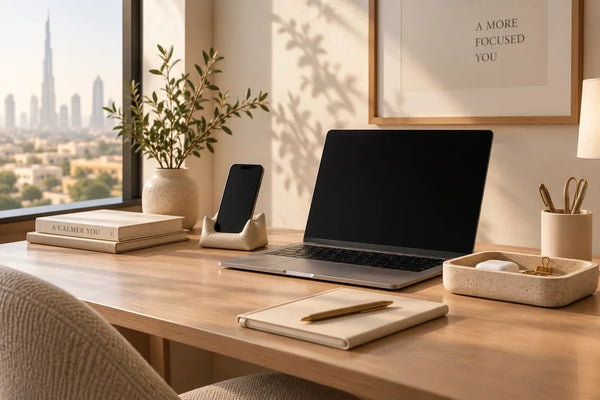
A desk is one of the easiest places to introduce Japandi style because it is used every day and can quickly become cluttered. Start with the same principles: matte finishes, neutral tones, organic forms, and objects that serve a genuine purpose. A phone stand, for example, can keep the phone upright and accessible without introducing the visual language of typical office equipment. The Sofa is one example — a sculptural phone stand with a soft, rounded silhouette designed to hold a phone upright for calls while keeping the desk visually calm.
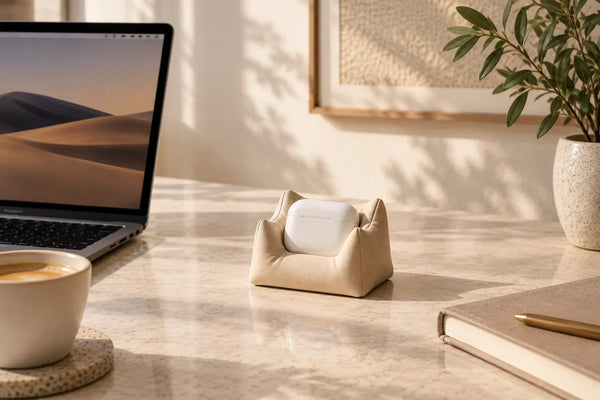
The same principle applies to other desk accessories. A tablet or iPad stand should provide a useful viewing position without dominating the surface, while an earbud stand should be compact enough to feel like part of the desk rather than another gadget. The goal isn't to fill a Japandi desk with matching accessories. It's to choose a small number of useful objects and give each one a clear place.
Japandi Beyond the Desk: Bedside Table Design
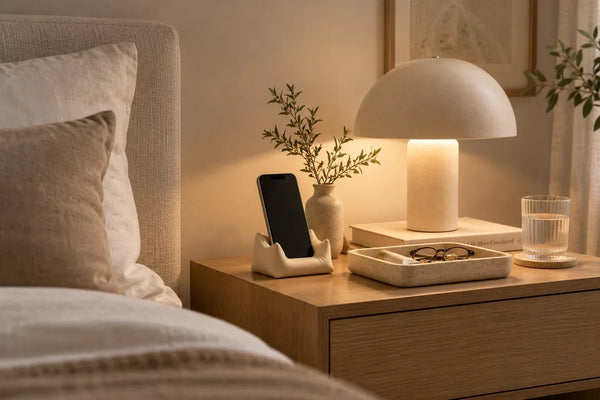
Japandi principles don't stop at the desk. Bedside table design is one of the most overlooked applications of the style, largely because bedside tables tend to accumulate clutter faster than almost any other surface in the home — chargers, books, loose earrings, a phone face-down and forgotten.
A Japandi-styled nightstand keeps this to a minimum: a single lamp, one or two objects with a clear purpose, and nothing purely decorative. This is exactly where The Pillow fits — a soft, sculptural bedside phone stand that gives the phone a fixed, considered place rather than letting it disappear into the nightstand clutter. Think of it as The Sofa's quieter sibling: the same phone stand logic, the same matte material and rounded form, simply scaled and softened for bedside table design instead of a desk. It's a small object, but in Japandi terms, it's doing exactly the job a well-designed piece should: function first, with a form quiet enough not to disrupt the calm of the room.
Japandi in Shared Spaces
Living rooms and shared spaces are harder to keep Japandi-consistent simply because more people and more objects pass through them. The trick is usually one well-chosen catch-all piece rather than several small ones scattered across a console or coffee table.
The Couch works well here — a wider, sculptural piece from the same considered material and form language as The Sofa, The Pillow (bedside phone stand), and The Couch form one connected system rather than five unrelated products — the same Japandi logic applied consistently from the desk to the nightstand to the living room.
A Simple Way to Start
You don't need to redesign a home to move toward Japandi. Start with one surface — a desk, a nightstand, a console table — and apply the same short checklist: neutral tone, natural or matte material, genuine function, nothing purely decorative. A single phone stand or tablet stand, chosen well, is often enough to shift how an entire desk space or bedside table feels. Once one surface feels right, the rest tends to follow the same logic naturally.
For more on how this plays out at the desk specifically, see our guide to desk setup ideas for Dubai homes and what actually makes a phone stand worth keeping.
Frequently Asked Questions
What is Japandi style in simple terms?
Japandi combines Japanese minimalism with Scandinavian warmth — neutral natural materials, uncluttered surfaces, and objects chosen for function as much as form.
What type of phone stand works with a Japandi-style desk?
A phone stand that suits a Japandi-style desk should have a simple, organic form, restrained colour, matte finish and a useful viewing angle. It should feel like part of the workspace rather than a separate piece of office equipment.
How do I apply Japandi style to bedside table design?
Keep the nightstand to a lamp and one or two functional objects — a considered bedside phone stand like The Pillow gives the phone a fixed place without adding visual clutter.
Is Japandi the same as Scandinavian minimalism?
They're closely related but not identical. Japandi adds Japanese design principles around craftsmanship and emptiness to the warmth and functionality already central to Scandinavian style.
What's a good starting piece for Japandi home decor?
A single, well-made functional object on a surface you use daily — a phone stand, tablet stand, or catch-all piece like The Couch — is an easier entry point than redecorating a full room.
What colours are used in Japandi interiors?
Japandi interiors typically use muted, natural colours such as warm white, cream, beige, sand, taupe and soft wood tones. The palette is restrained rather than completely monochromatic, with texture and natural materials providing visual interest.
What materials are commonly used in Japandi style?
Common Japandi materials include natural wood, stone, ceramics, linen and other tactile, understated materials. Matte surfaces and visible natural textures generally work better than highly glossy or overly decorative finishes.
Quiet by Design
Japandi isn't a trend to chase so much as a standard to apply — neutral, functional, made well. Start with one surface, choose objects that do their job without asking for attention, and the rest of the style tends to follow on its own.