design
What Is Quiet Luxury, Really?
What quiet luxury really means in home decor, and how a considered phone stand, tablet stand, and desk setup reflect the same standard.

Quiet luxury in home decor isn't about spending more. It's about choosing fewer, better-made objects and giving each one a proper place.
A quiet luxury home tends to favour considered materials, calm colours, useful objects and a sense of restraint. It isn't necessarily about creating a home that looks expensive. Instead, it's about creating a space that feels intentional — where the things you use every day have been chosen because they work well, look right and are made to last.
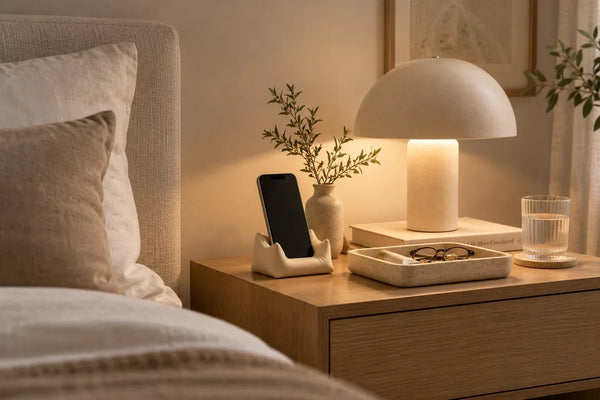
The idea is often associated with fashion, but quiet luxury works just as naturally in interiors. It can show up in the way a desk is organised, how a bedside table is arranged or which everyday objects are allowed to remain visible.
So what does quiet luxury actually mean in home decor, and how can you bring the idea into your own space without turning your home into a showroom?
What Is Quiet Luxury in Home Decor?
Quiet luxury in home decor means choosing well-made, considered objects over trend-driven or disposable ones.
It prioritises quality, restraint, timeless design and thoughtful materials rather than obvious branding or decoration for its own sake. A quiet luxury interior doesn't need to be filled with expensive furniture or designer labels. The emphasis is on how a space feels and how deliberately its individual pieces have been chosen.
This might mean a neutral colour palette, natural-looking materials, clean forms or simply leaving enough space around the objects you already own.
The principle is straightforward: choose less, choose well and give the things you keep a purpose.
That can apply to the large pieces in a room, but it also applies to the small objects you interact with every day — a phone stand on your desk, a tablet stand beside your sofa or an earbud stand on your bedside table.
These details may seem insignificant individually. Together, they influence whether a space feels cluttered or considered.
Quiet Luxury Isn't a Style. It's a Standard.
Most home decor trends are about how a space looks.
Quiet luxury is more about the standard behind how a space is made.
It has less to do with following a specific colour palette or copying a particular interior aesthetic, and more to do with making consistent choices: good materials over trend-driven ones, restraint over abundance, and objects chosen to last rather than to be replaced next season.
A home built around this idea doesn't necessarily look expensive.
It looks intentional.
There's an important difference.
You might see it in a phone stand that has stayed on the same desk for years rather than months. You might see it in a tablet stand that still feels appropriate after the room around it has changed. Or you might simply notice that everyday objects have a proper place instead of accumulating wherever there happens to be space.
Quiet luxury is therefore less about adding something impressive and more about removing what isn't necessary and choosing what remains with care.
How Do You Create a Quiet Luxury Home?
You don't need to redesign your entire home to introduce quiet luxury.
Start with the things that are already visible and used every day.
Choose objects that serve a clear purpose, work well in the space and complement the things around them. Keep surfaces relatively clear, avoid buying purely because something is trending, and look for materials and forms that you won't quickly grow tired of.
A few simple principles can help:
Choose Fewer, Better Objects
A room doesn't become more considered because it contains more decor.
Instead, choose objects that genuinely contribute to the way you use the space. A useful lamp, a well-designed tray or a simple stand for a device you use every day can have more impact than several decorative pieces that serve no real purpose.
Prioritise Materials
Material is one of the easiest ways to make an everyday object feel considered.
Look beyond branding and think about how something feels, how it will age and whether it is appropriate for the way you intend to use it.
Quiet luxury isn't necessarily about choosing the most expensive material available. It's about choosing a material that makes sense for the object and using it well.
Keep Surfaces Calm
Negative space is part of the look.
A bedside table, desk or shelf doesn't need to be completely empty, but every object should have a reason to be there.
If something is used every day, giving it a fixed place can make a surprisingly large difference to how organised the whole surface feels.
Choose Timeless Forms
Trends come and go quickly.
Quiet luxury favours shapes and finishes that can sit comfortably within different interiors rather than objects designed around a short-lived aesthetic.
A simple form is often easier to live with — and easier to keep.
Where Does Quiet Luxury Actually Show Up?
Quiet luxury rarely lives only in the obvious places.
It's easy to spend time choosing a sofa, dining table or bed and consider the larger pieces of a room finished. It's harder — and often more revealing — to apply the same standard to the smaller objects that make up daily life.
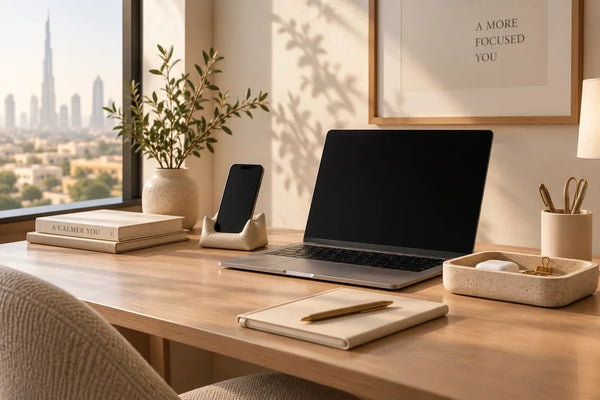
A desk is a good example.
A cluttered desk can undermine an otherwise considered home decor scheme because it is both used and seen constantly. A phone lying flat beneath papers, cables trailing across the surface or earbuds disappearing into a drawer can make the space feel less ordered.
None of these things are particularly expensive forms of clutter.
But they are still clutter.
The solution isn't necessarily more furniture. Often, it's a few well-chosen objects that give everyday essentials a proper place.
A phone stand can hold a phone upright rather than flat on the desk. A tablet stand can keep a screen at a more comfortable and considered angle. An earbud stand can give a small object that is easily misplaced a fixed home.
Each is a small decision.
Together, those decisions can change the character of a desk.
How Do You Create a Quiet Luxury Desk Setup?
A quiet luxury desk setup should feel functional first, but considered in every detail.
The aim isn't to create a desk that looks untouched. It's to create a workspace where the things you actually use are organised without making the surface feel crowded.
Start with the essentials.
Think about what you reach for throughout the day — your phone, tablet, earbuds, notebook, keyboard or other work tools. Then consider whether each item has a logical place.
A phone stand such as The Sofa can keep a phone upright and visible for calls, notifications or quick reference rather than leaving it flat on the desk.
A tablet stand such as The Lounge can lift a screen to a more comfortable viewing position for calls, reading or recipes.
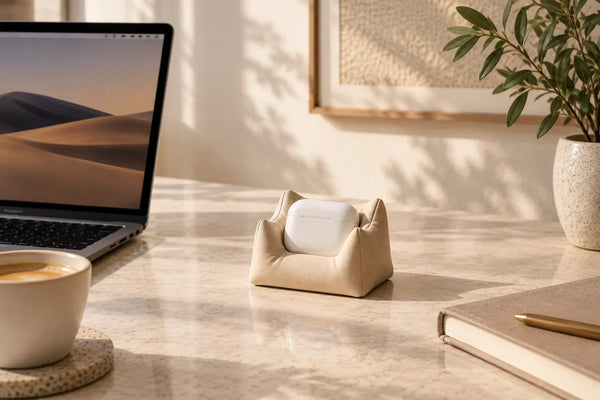
For smaller objects, The Pod provides a dedicated place for earbuds or AirPods rather than allowing them to disappear into a bag or drawer.
The important part isn't any individual accessory.
It's the relationship between them.
A phone stand, tablet stand and earbud stand should make the desk easier to use, not simply add more things to it.
And just as important as what you place on the desk is what you leave off it.
A clear surface around the objects you actually use gives the whole setup room to breathe.
Materials Over Marketing
A lot of what gets marketed as luxury home decor relies heavily on branding.
A recognisable logo, a prominent label or a price tag can become the thing that communicates value.
Quiet luxury takes a different approach.
The material and craftsmanship carry more of the weight. The object doesn't need to announce itself.
This is one reason made-to-order and thoughtfully manufactured pieces fit naturally into the quiet luxury idea.
A phone stand or tablet stand that is made to order rather than mass-produced and shelved, and that uses a durable matte-finished material rather than something that quickly looks worn, reflects the principle through the way it is made.
The point isn't that every object in a quiet luxury home needs to be handmade or expensive.
It's that the object should earn its place.
When something is useful, well made and suited to the space, it doesn't need a logo to justify why it's there.
Is Quiet Luxury the Same as Minimalism?
No. Quiet luxury and minimalism overlap, but they aren't the same thing.
Minimalism is primarily concerned with reducing excess. Quiet luxury is more concerned with the quality, intention and longevity of the things you choose to keep.
A minimalist space might have very few objects because the goal is to have as little as possible.
A quiet luxury space can contain more objects, but those objects are selected carefully and tend to have a clear purpose or relationship with the space.
The two approaches can work beautifully together.
For example, a desk doesn't need to be completely empty to feel minimal or luxurious. A phone stand, tablet stand and earbud stand can all remain visible if each has a purpose and the overall arrangement remains calm.
Does Quiet Luxury Home Decor Have to Be Expensive?
No.
Price isn't what defines quiet luxury.
The concept is more closely associated with quality, intention, restraint and longevity than with how much an object costs.
A small, well-designed phone stand that you use every day can fit the quiet luxury principle more naturally than an expensive decorative object that you bought because it was fashionable.
This is also why quiet luxury can be particularly useful when thinking about smaller spaces.
You don't necessarily need more things. You need the right things.
Choosing one useful object that solves an everyday problem and looks at home in your space can be more meaningful than filling a surface simply because it feels empty.
A Quiet Luxury Desk Setup, in Practice
If you wanted to apply the idea to a real desk, it could be as simple as this:
A phone stand
A stand such as The Sofa keeps your phone upright and accessible for calls, messages or quick reference.
A tablet stand
Something like The Lounge raises a tablet to a more considered viewing angle without requiring a large piece of furniture.
An earbud stand
The Pod gives small wireless earbuds or AirPods a fixed place on the desk.
A clear surface
Leave enough open space around these essentials that the desk still feels easy to use.
None of these pieces needs to be dramatic.
That's precisely the point.
Quiet luxury home decor is built from small, consistent choices rather than one dramatic purchase.
Why 3CHIC Fits the Quiet Luxury Idea
At 3CHIC, every phone stand, tablet stand and earbud stand is 3D-printed in the UAE and made to order rather than mass-produced and stored on a shelf.
The design approach favours restraint: matte finishes, considered forms and a neutral palette rather than decoration for its own sake.
That makes the pieces easy to introduce into spaces that already have their own character.
A phone stand doesn't need to become the focal point of a desk. A tablet stand doesn't need to compete with the rest of the room. An earbud stand can simply give a small everyday object a proper place.
That's the same principle behind quiet luxury itself:
Fewer things. Better considered. Made to be used.
If you're building a more considered workspace, you can also explore:
Desk Setup Ideas for Dubai Homes — practical ideas for creating a calmer desk setup in a Dubai home.
Best Phone Stands for Home or Office — what separates a phone stand worth keeping from one that ends up in a drawer.
What a Work-From-Home Setup Should Feel Like — how the same principles of comfort, organisation and restraint can extend beyond the desk.
Frequently Asked Questions
What does quiet luxury mean in home decor?
Quiet luxury in home decor means choosing fewer, better-made and more considered objects rather than filling a space with trend-driven or disposable decor. It focuses on material quality, restraint, timeless design and intentional choices rather than visible branding or expense.
Is quiet luxury the same as minimalism?
No. Minimalism focuses primarily on reducing excess, while quiet luxury focuses on the quality and intention behind the objects you choose to keep. The two approaches overlap and can work well together.
How can I apply quiet luxury to my desk setup?
Start with the objects you use every day. Give your phone, tablet, earbuds and other essentials a fixed place, choose simple well-made accessories and keep enough open space on the desk to prevent it from feeling crowded.
Does quiet luxury home decor have to be expensive?
No. Quiet luxury is not defined by price. It is about choosing objects thoughtfully, prioritising quality and materials, avoiding unnecessary clutter and selecting pieces that you expect to use for a long time.
What's the easiest place to start applying quiet luxury at home?
The desk is a good place to start because it is often used and seen every day. Small changes such as giving your phone or tablet a proper stand and removing unnecessary items can make the space feel noticeably more considered.
What colours work well with quiet luxury interiors?
Quiet luxury interiors often work well with calm, understated colours and finishes, including neutrals and natural-looking tones. However, there isn't one required colour palette. The more important principle is choosing colours that work together and don't make the space feel visually busy.
Can small accessories make a home feel more luxurious?
Yes. Small everyday objects can have a significant effect on how organised and considered a room feels. A well-designed phone stand, tablet stand or earbud stand can make an everyday surface feel more intentional without adding unnecessary decoration.
Quiet, Not Loud
Quiet luxury was never about whispering the same message that loud luxury shouts.
It's a different standard altogether — one measured in material, restraint and objects made to be used for years rather than seasons.
Applied to a desk, a bedside table or a shelf, it can look almost unremarkable at first glance.
That's exactly the point.
The best objects don't always ask to be noticed.
They simply make the space around them feel better.