care
What Are Neutral Interiors? Creating a Calm Home Aesthetic
A guide to neutral interiors and the calm home aesthetic — covering phone stand, tablet stand, and earbud stand choices for a restful desk setup and bedside table.

A calm home aesthetic isn't just a design choice — it's a way of making everyday spaces feel easier to live in. Neutral interiors use soft, considered colours, natural-looking materials, texture and uncluttered surfaces to create a home that feels calm rather than visually demanding.
But neutral doesn't have to mean plain.
The most successful neutral homes have warmth, texture and personality. Instead of relying on bold colour or statement pieces, they use proportion, materials, light and carefully chosen objects to create interest.
That same principle can extend beyond the living room. It can shape a bedroom, a bedside table, a home office or even the small objects that stay on your desk every day.
Here's what makes neutral interiors feel calm, how to keep them from feeling flat, and how to bring the aesthetic into the spaces you actually use.
What Are Neutral Interiors?
Neutral interiors are spaces built around understated colours and materials rather than strong, highly contrasting shades.
Common neutral colours include:
- Warm white
- Cream
- Beige
- Sand
- Taupe
- Greige
- Soft grey
- Natural wood tones
But a neutral interior isn't simply a room painted beige.
The overall feeling comes from how colour, texture, material, proportion and objects work together.
A neutral room might have warm white walls, natural wood, linen upholstery, matte ceramics and a few carefully chosen accessories. Another might use stone tones, soft grey, darker wood and textured fabrics.
The palette can vary considerably while the underlying principle remains the same: nothing needs to compete for attention.
This is what gives neutral interiors their calm quality.
Why Do Neutral Interiors Feel So Calming?
A visually busy room contains more elements competing for your attention — colours, patterns, objects, contrasts and different textures.
Neutral interiors tend to reduce that visual competition.
This doesn't mean that neutral rooms are automatically more relaxing, or that colour is inherently stressful. Rather, a restrained palette can make it easier for the different elements of a room to sit together without competing.
The effect is particularly noticeable in spaces designed for rest and focus.
A bedroom with a calm palette can feel softer at the end of the day. A reading corner can feel more contained. A home office can feel less visually distracting.
The goal isn't to make a room empty.
It's to make the things that remain feel intentional.
Why Neutral Doesn't Mean Boring
Neutral interiors sometimes get dismissed as safe or uninspired.
In practice, a well-designed neutral room can be one of the harder home decor styles to get right.
When bold colour isn't doing the work, texture, material and proportion have to carry more of the design.
Think linen against warm wood. Matte ceramic beside soft upholstery. Stone tones next to woven fabric. A smooth surface alongside something tactile.
These differences create interest without introducing visual noise.
Cream, sand, taupe and warm white aren't the absence of a decor choice. They're deliberate choices made because they allow the materials, shapes and proportions around them to be noticed.
That's the difference between a room that is simply beige and one that feels considered.
How Do You Create a Neutral Home?
You don't need to redesign your entire home to create a neutral interior.
Start by considering the elements already in the room and decide what you want the overall atmosphere to feel like.
Start With a Simple Colour Palette
Choose a small group of related neutrals rather than trying to match everything perfectly.
Warm white, cream, sand and taupe can work together naturally because they have similar visual qualities.
You can then introduce darker tones through furniture, wood, ceramics or smaller accessories.
The aim isn't perfect colour matching.
It's creating enough consistency that the room feels connected.
Use Texture Instead of More Colour
When a room has a restrained palette, texture becomes especially important.
Linen, wood, woven materials, ceramics, stone and matte finishes can all introduce variation without requiring a new colour.
This is one of the simplest ways to prevent a neutral home from feeling flat.
A cream linen cushion against a warm white sofa has more visual interest than two completely identical cream fabrics, even though the colour difference may be minimal.
Give Objects Room to Breathe
A neutral home doesn't need every surface filled.
Leaving some open space between objects can make the things you do choose feel more deliberate.
This is particularly useful on surfaces such as coffee tables, shelves, bedside tables and desks.
A few useful objects with space around them can often feel more luxurious and considered than a larger collection of decorative pieces.
Choose Everyday Objects Carefully
The small things in a room matter.
A phone stand, lamp, tray, tablet stand or earbud stand might not be the first thing you think about when planning an interior, but these objects are often among the things you see and use most frequently.
If they clash with the rest of the room, they can introduce visual noise.
If they work with the palette and materials already there, they can quietly become part of the overall design.
How Do You Make a Neutral Home Feel Warm?
The easiest way to make a neutral home feel warm is to avoid relying on colour alone.
Warmth comes from a combination of colour temperature, texture, materials, lighting and the objects you choose.
Warm white tends to feel softer than a stark, cool white. Natural wood can introduce warmth without adding a strong colour. Linen and woven materials add softness. Warm lighting can change how the entire palette feels in the evening.
You can also introduce a small amount of contrast.
A darker wood tone, muted ceramic or softly contrasting accessory can give a neutral room definition without disrupting the calm palette.
The result should feel layered rather than perfectly matched.
Calm as a Form of Care
There's a reason neutral interiors are often associated with wellbeing and self-care content as well as interior design.
A visually loud room can feel demanding simply because there is so much to process.
A calmer room doesn't ask for as much attention.
This matters most in spaces where you're meant to rest or reset — a bedroom, reading corner, living room or quiet desk at the end of a long day.
The bedside table is one of the clearest examples.
A nightstand covered with chargers, loose jewellery, books, cables and a phone lying flat can create a small amount of visual disorder right before sleep.
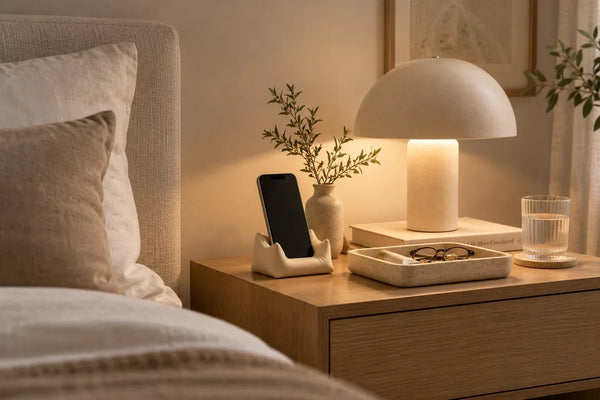
A more considered setup might contain a soft lamp, one or two useful objects and enough open surface to keep everything feeling contained.
You can explore more ideas for this in our guide to bedside table ideas for a calm, considered nightstand.
The principle is simple:
A calm space doesn't need to be empty. It needs to feel intentional.
How Do You Style a Neutral Bedside Table?
A neutral bedside table works best when you start with what you actually use.
A practical setup might include:
- A soft bedside lamp
- Your current book
- A phone stand
- A small personal object
- A little open space
The key is restraint.
If your phone normally ends up charging on the nightstand, give it a proper place rather than letting the cable and phone become part of a loose pile.
A phone stand such as The Pillow can fit naturally into a calm bedside setup while keeping your phone upright and accessible.
The aim isn't to create a picture-perfect nightstand.
It's to create one that feels easy to reset every evening.
Bringing Neutral Calm to the Desk
The same principle applies to a home office.
A desk can undermine the calm of an otherwise neutral home surprisingly quickly. It is a working surface, so some level of activity and equipment is inevitable.
The answer isn't to hide everything.
It's to make the things that remain feel organised.
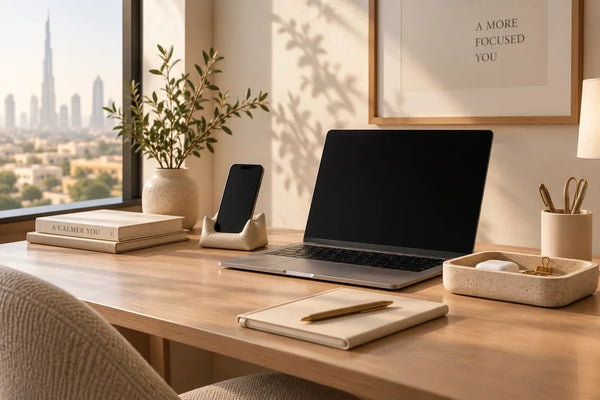
A phone stand in a matte neutral finish can keep your phone upright instead of lying flat beneath papers. A tablet stand can keep a screen at a considered angle instead of being propped against books. An earbud stand can give small wireless earbuds a fixed place rather than allowing them to disappear into a drawer or bag.
If you're choosing a desk accessory for a neutral home, look for:
- A simple silhouette
- A matte rather than overly glossy finish
- A colour that works with your existing palette
- A small footprint
- A clear functional purpose
This is less about finding the "perfect" accessory and more about choosing objects that don't compete with the room.
For more practical ideas, see our desk setup ideas for Dubai homes.
Can a Desk Setup Be Part of a Calm Home Aesthetic?
Absolutely.
A home office doesn't have to look like a separate corporate workspace.
When the desk shares the same materials, colours and level of restraint as the rest of the home, it can feel like a natural part of the room.
A neutral desk might use warm wood, soft whites, muted accessories and a small number of carefully placed objects.
The important thing is consistency.
A calm living room next to a visually chaotic desk can feel disconnected. Bringing the same principles of restraint into the workspace makes the entire home feel more cohesive.
This is particularly useful in apartments and smaller homes, where a desk may sit within a bedroom, living room or dining area rather than having a separate office.
Can Neutral Interiors Still Have Personality?
Yes — and they should.
A neutral home doesn't have to look like a showroom.
Personality can come from the things that are meaningful to you rather than from colour alone.
A favourite piece of artwork, a vintage wooden chair, a collection of books, a handmade ceramic or a photograph can all add character to a neutral room.
The point isn't to remove everything personal.
It's to create enough visual calm that the things you love can be noticed.
This is also why neutral interiors can evolve well over time. You can change a piece of artwork, add a different cushion or bring in a new plant without having to redesign the entire room around it.
Neutral Interiors and Japandi: What's the Difference?
Neutral interiors and Japandi can look similar, but they aren't the same thing.
Neutral interiors describe an approach to colour and atmosphere, while Japandi is a broader design style combining Japanese and Scandinavian influences.
Both often use natural materials, restrained colour palettes, simple forms and uncluttered spaces.
But you can have a neutral interior that isn't Japandi.
A neutral room might be traditional, contemporary, rustic, modern or eclectic depending on its furniture, architecture and decorative choices.
If you like the calm, restrained qualities of neutral interiors, our beginner's guide to Japandi style explores one related approach in more depth.
Where 3CHIC Fits the Calm Home Aesthetic
The same principles can apply to the small objects that live throughout a home.
The Settle Collection is designed around a similar idea: simple forms, matte finishes, soft rounded silhouettes and a neutral palette that can sit naturally across different spaces.
The Sofa can work as a phone or tablet stand, keeping a device at a useful angle without adding visual bulk.
The Lounge provides a considered place for a phone while keeping the screen visible.
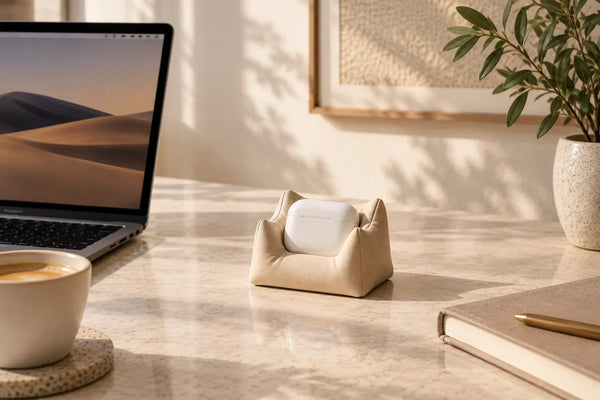
The Pod gives AirPods and other wireless earbuds a small, dedicated place on a desk or bedside surface.
The Pillow is designed for the bedside, keeping your phone upright rather than flat on the nightstand.
And The Couch can act as a shared-space catch-all for the smaller things that tend to move around a home.
Each piece has a practical purpose.
That's important because a calm home isn't created by adding objects simply because they look good. It's created by choosing objects that work well and belong in the space.
Frequently Asked Questions
What makes neutral interiors feel calming rather than plain?
Neutral interiors feel calming when colour is supported by texture, material, proportion and thoughtful spacing. Linen, warm wood, matte ceramics and natural-looking finishes can create depth and interest without relying on strong colours or busy patterns.
What colours are best for a neutral interior?
Common choices include warm white, cream, beige, sand, taupe, greige and soft grey. The best combination depends on the room, lighting and materials, but related warm neutrals often create a softer and more cohesive atmosphere.
How do you make a neutral home feel warm?
Use warm whites and earthy neutrals alongside natural wood, textured fabrics, matte finishes and warm lighting. A small amount of contrast can also add depth without making the room feel visually busy.
Is neutral home decor the same as minimalist decor?
No. Neutral decor focuses primarily on a restrained colour palette and calm visual atmosphere, while minimalism is more concerned with reducing excess. A neutral home can still contain plenty of furniture, artwork and personal objects.
How do I make a neutral room less boring?
Introduce variation through texture, materials, shapes and proportions rather than simply adding more colour. Linen, wood, stone, ceramics, woven materials and plants can add depth while keeping the overall palette calm.
How do you style a neutral bedside table?
Start with the essentials: a soft lamp, your current book, a phone stand and perhaps one personal object. Keep some open space so the surface remains practical and visually calm.
Can a desk setup work with neutral home decor?
Yes. Choose desk accessories with simple forms, matte finishes and colours that complement the rest of the room. A phone stand, tablet stand and earbud stand can help organise everyday essentials without making the desk feel visually busy.
Is neutral home decor more expensive than colourful decor?
Not inherently. The cost of an interior depends more on materials, craftsmanship, furniture and individual choices than on whether the colour palette is neutral. A thoughtful neutral home can be created at many different budgets.
A Home That Doesn't Ask for Attention
A calm home aesthetic isn't about removing personality from a space.
It's about removing the visual noise that competes with rest, focus and the small everyday moments a home is actually for.
Neutral interiors, done well, don't disappear. They create a quieter backdrop for the people, objects and routines that matter.
The goal isn't a home that looks untouched.
It's a home that feels easy to return to.
Less visual noise. More room to live.